Thursday, 21 November 2013

Final Submission

Final Submission

Strategy statement:

My Strategy for my experiment 2 is to try to make the Barcelona pavilion look like 100 years being abandoned. the nature will leave her traces on the building, for example corrosion, i did some research on the materials of the building, therefore i will try to make the material looks old, being wash or cracked. i think cracked walls will be the majority of my building, as the Barcelona pavilion is constructed with a lot marble materials.

the vegetation near by the building, i mainly used grass and couple of tress. the reason is it will be better to show and demonstrate when i render videos or images.


5 X IMAGES OF DRAFT CRYENGINE3 ENVIRONMENT


Files: https://www.dropbox.com/sh/2pm2u8r437kopic/dFsDIYCH3V

Tuesday, 15 October 2013

W11 _EXP2-Week 3_ Tutorial Task and Independent Study

3 images:


3 sketches :


Image reference:
http://www.abc.net.au/reslib/201101/r696546_5296849.jpg
https://blogger.googleusercontent.com/img/b/R29vZ2xl/AVvXsEimkgzoAKZTBTexfH1aJ4SlrozxCa3qp4yhiaeauL5jqc_g6-Q5rCYIXXniFBhg_sIwpB9dE2gq7HIYGoKZB371ZHEHaXPs65ml4rdv7w3nQDGYMXsLs0c6TtcelpLV9TiraMQ5K5j36WZh/s1600/pakistan-floods-2010-8-4-10-10-39.jpg
http://blogs.independent.co.uk/wp-content/uploads/2012/10/flooding.jpg


Individual study:

working progress


W10 _EXP2-Week 2_ Lecture Reflection


This week’s lecture showed previous years’ work, I think it is very helpful, it give me an idea of what would this assessment aspect us to do. Especially how it connect with the assessment one. The information of the three houses helped me to get to know the structure and material.

W10 _EXP2-Week 2_ Tutorial Task and Independent Study

Tutorial Task


Before


After


ddn

diff

spec
My chosen house: Barcelona pavilion.


Independent Study

Modeling Progress:


Concrete


Concrete is a hardened building material created by combining a chemically inert mineral aggregate (usually sand, gravel, or crushed stone), a binder (natural or synthetic cement), chemical additives, and water.

Concrete has become a major focus of green building initiatives and research.  The manufacture of the material is one of the worst CO2 generating processes in the world, with five to eight percent of manmade CO2 coming from concrete production.  MIT researchers have come up with a way to cut those numbers dramatically by making concrete structures last as long as 16,000 years, requiring less of it to be made in the first place.

There are two theories on how corrosion in concrete occurs:
1.       Salts and other chemicals enter the concrete and cause corrosion. Corrosion of the metal leads to expansive forces that cause cracking of the concrete structure.
2.       Cracks in the concrete allow moisture and salts to reach the metal surface and cause corrosion.


Glass


Glass is much more resistant to corrosion than most materials, so much so that it is easy to think of it as corrosion-proof. Glass windows after several years exposure to the elements remain clear and apparently unaffected. Glass bottles hold a wide range of liquids that would dissolve other materials. In the laboratory, reactions are carried out in glass beakers and flasks without damage to the beakers or contamination of the solutions reacting.
But, in spite of these indications that glass is indestructible by chemical attack, under certain conditions it will corrode, even dissolve. In these cases, it is important to choose the right type of glass, since some are more corrosion resistant than others. Only a few chemicals aggressively attack glass -- hydrofluoric acid, concentrated phosphoric acid (when hot, or when it contains fluorides), hot concentrated alkali solutions and superheated water. Hydrofluoric acid is the most powerful of this group; it attacks any type of silicate glass. Other acids attack only slightly; the degree of attack can be measured in laboratory tests but such corrosion is rarely significant in service for acids other than hydrofluoric and phosphoric.
Acids and alkali solutions attack glass in different ways. Alkalis attack the silica directly while acids attack the alkali in the glass. When an alkali solution attacks a glass surface, the surface simply dissolves. This process continuously exposes a fresh surface which in turn is dissolved. As long as the supply of alkali is sufficient, this type of corrosion proceeds at a uniform rate.

Acid corrosion behaves quite differently. By dissolving the alkali in the glass composition, a porous surface is left that consists of the silica network with holes where the alkali has been removed by the acid. This porous surface slows the rate of attack since the acid must penetrate this surface layer to find alkali to dissolve.

Corrosion by water is similar to acid corrosion in that alkali is removed from the glass surface. Water corrosion acts at a much slower rate. At high temperatures, however, water corrosion can become significant. Gauge glasses for steam boilers are a case in point. These products must be protected from the superheated water by a sheet of mica or replaced on a schedule that insures that they will not be seriously weakened.


Marble

Marble is susceptible to chemical weathering. Marble holds up better than limestone in both acid and unpolluted rainwater, but it will show signs of weathering in time. Water enters small holes in the marble at this point, worsening the weathering. This phenomenon is known as surface flaking.

Weathering is the natural breakdown of rocks into smaller particle sizes and different forms. Marble is a metamorphic rock that was once a limestone or dolomite rock; therefore, the properties of marble and limestone are similar. Chemical weathering causes a rock to dissolve or alter its form from one rock type to another. Over time, a marble or limestone rock may be subject to physical weathering as well, depending on its location.

Temperature swings from hot to cold can form cracks in limestone or marble as the rock expands and contracts. Over time, these cracks will increase in size and weaken the rock, causing it to crack and break into smaller pieces. In addition, ice crystals and minerals, such as quartz and calcite, can precipitate in the cracks of the limestone and marble rocks and cause them to expand and break as the crystals grow.

Marble and limestone rocks are very susceptible to erosion by water and acid rain. Water from rainfall, streams and rivers pouring over and hitting the rocks will slowly wear away the surface of the stones. Over time, the marble and limestone will become smooth and decrease in size. Marble and limestone river rocks form from the action of water on the rock as they move down the river. Acid rain has a significant effect on marble and limestone. Carbonic, sulfuric or nitric acid are components of acid rain that will react with the calcium carbonate in the marble and limestone to pit and dissolve the rock over time.

Reference:

http://www.madehow.com/Volume-1/Concrete.html#ixzz2kykt7vV1
http://corrosion.ksc.nasa.gov/corrincon.htm
http://www.cement.org/tech/cct_dur_corrosion.asp http://answers.yahoo.com/question/index?qid=20130603093034AAnCwh9


W8 _EXP2-Week 1_ Lecture Reflection


We looked at the previous students’ work at this week’s lecture, it gave a clearer idea of what our experiment 2 would be expecting. And the videos from the course folder are very helpful, the documentaries show different places that have been abandoned, it gave me some really good examples. 

Tuesday, 17 September 2013

W8 _EXP2-Week 1_ Tutorial Task and Independent Study

Tutorial Task

 3 texture:


3ds max screenshot:


Cryengine screen shot:


Individual Study


1.An other example of 3ds Max 2012 to CryENGINE3 export process.


2.Three selected houses


Barcelona Pavilion
The Barcelona Pavilion is designed by Ludwig Mies van der Rohe, was the German Pavilion for the 1929 International Exposition in Barcelona, Spain. 
The main elements of the building are quite big, walls and roofs are both large pieces of  as marble, red onyx and travertine.


Rudin House
The  Rudin House is designed by Jacques Herzog and Pierre de Meuron; constructed in 1997;  it is located in a village at the limit of France and Switzerland (Leymen), was one of the earliest works of Herzog & de Meuron, conducted for the art gallery owner Hanspeter Rudin.
The main materials of the building are concrete and glasses.


House at Bordeaux
The House at Bordeaux is designed by Rem Koolhaas, constructed in 1998; it is located in  Bordeaux, France, it was designed for a family.
the main materials of this buidling are: cement, glass and aluminum.


Images reference:
http://en.wikipedia.org/wiki/File:The_Barcelona_Pavilion,_Barcelona,_2010.jpg
https://blogger.googleusercontent.com/img/b/R29vZ2xl/AVvXsEj3Lj9c89tXYH2n173yUZ-dzIJB6L6HkLXA6mjmpp6AEZzF0TtyRmMFuYV_PPKtAy9f2ZwZizfw3eNw-wrSBQD5RO0CoAe4WjlBv9U3-tDlAnGrX9ZIOLFFcGNXo9gJca5VS0D9mK1F5ce6/s1600/Rudin+House.jpg
https://blogger.googleusercontent.com/img/b/R29vZ2xl/AVvXsEiTs2ZWkuqMOfOgXDUzSH9xeRqy7XW_wNU4Gb6Zl8tfKLClC_Vr17GE9-a9slh0HU7tHk1lxAJf7wLv7IeXouhmyb_JV8LkjeN0d06Bh750tPahIlfMqmBqOubjVxLrRmnqJ9vv9vs5vVwI/s1600/3163809730_e7cc61b9c9.jpg

EXP_1 – THE ISLAND– Submission


Video:


5 scales + 1

Letter: Yao Liu
Number: z3435582


Cry engine files:

Wednesday, 11 September 2013

W6 Lecture Reflection

In this week's lecture, the videos were really helpful, the films made think more about my video making, angles from different aspect, using distance, zoom in and out, and the tracks of the camera. It gave me some ideas to represent my island and letters. My letter U and 2 is kind of hard I think, but I think I may can use the camera to help to showing my letters.

Tuesday, 3 September 2013

W5 Lecture Reflection


This week’s lecture was interesting, the logos and letters in the lecture slides gave me a new understanding of using letter and patterns, and the way of representing those letters are quite creative. Its very helpful for me to design my letters in my assignment, letters can be abstracted into many different ways, by using different elements, combinations and even distance.

Week 5 - Independent study

Strategy 

My strategy for concealing and revealing my letter (U) and number (2) is to using the nature elements such as: mountains, river and shadow to show them. I will try to use different combination of elements, for example: leafs on a tree show the letter (U) and the shape of sea shore show (2). I think the combination of my letter and number its quite difficult, because the forms are both too around, its hard to find a combination to show it in a very natural way, but I will try to experiment and explore more method and technic.  


Draft of outsomes


Week 4: Lecture Reflection


This week’s lecture was very helpful. The concept of sublime was interesting, the images from the lecture was inspiring too, the art work, nature and today’s architecture, I liked it. The way how it influenced to today’s design gives a lot of thought in designing my island, do I need to plan it first from a big picture or start from a particular place? Use small element and enlarge it to a bigger scale in today’s life is so unique and cool. 

Week 4 Independent study

No fog

Fog

Waterfall

Rain


Week 4 Task

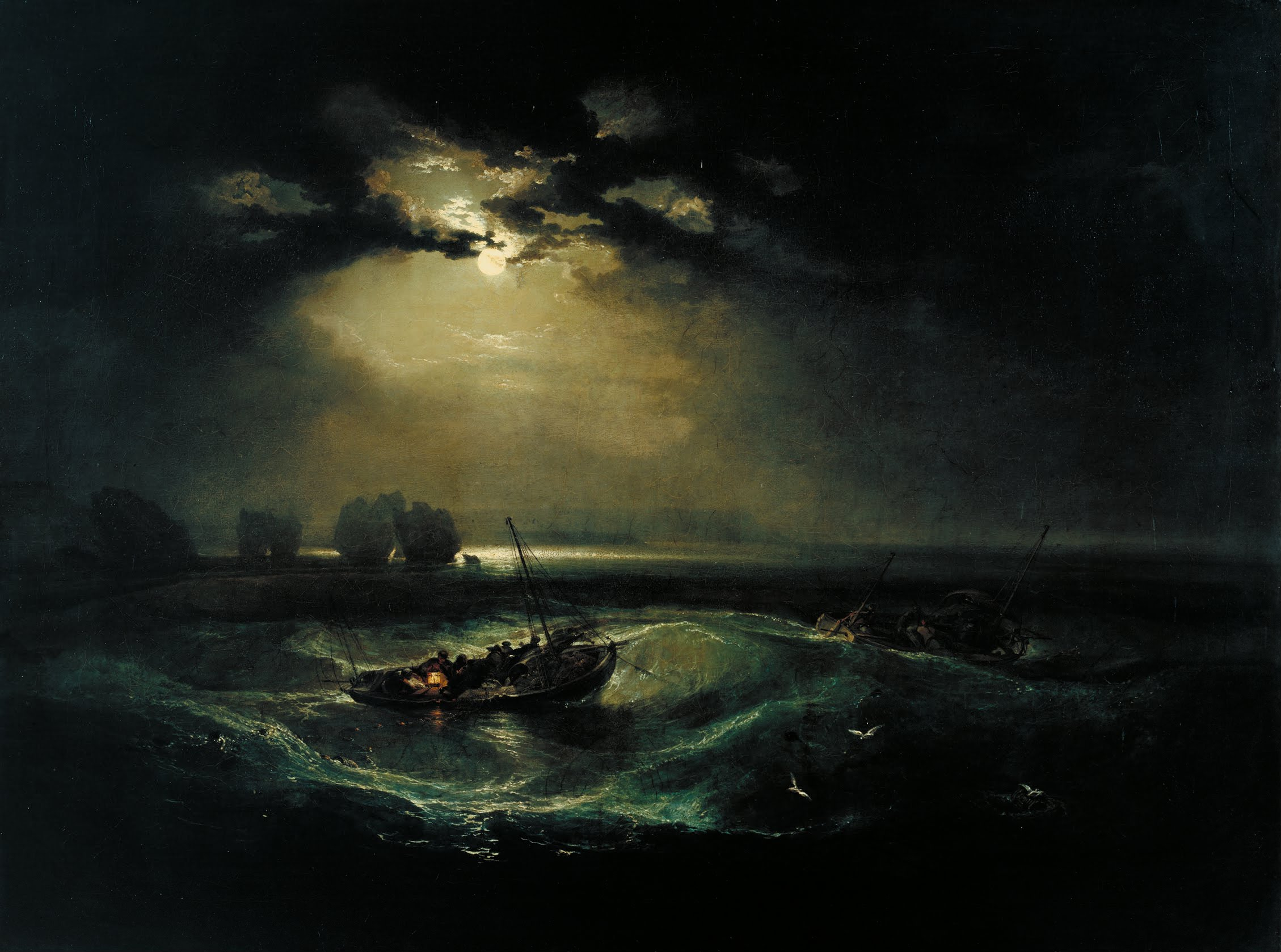
Lecture image ( JMW TURNER // FISHERMEN AT SEA )

Changed sky - 1
Changed sky -2

Time of day settings

Image reference:
http://upload.wikimedia.org/wikipedia/commons/0/0d/Joseph_Mallord_William_Turner_-_Fishermen_at_Sea_-_Google_Art_Project.jpg